The Japan most
travelers never find.
Mountain villages, forgotten hot springs, countryside roads with no crowds. Written by a traveler who keeps going further off the map.
A slow record of the parts of Japan tourists drive past.
I started Quiet Japan Travel in 2026, after one too many trips where the best part of the day was the drive between temples — not the temples themselves. I live outside Tokyo and work in construction and architecture, so I notice things most travelers walk past: the pitch of a farmhouse roof, why a road curves where it does, which villages still have someone living in them.
Right now this covers seven prefectures — Hokkaido, Aomori, Kochi, Ehime, Yamagata, Fukushima, and Miyagi — because I’d rather write nineteen honest dispatches than forty thin ones. More get added only after I’ve actually driven there.
You’ve already seen Tokyo.
Now find the rest of Japan.
Quiet Japan Travel is for people who want to go deeper — past the shinkansen stops, into the mountains, forests, and coastlines most itineraries never reach. Two dispatches, from opposite ends of the country, that show exactly what this blog is about:
Mount Yotei
The volcano that looks exactly like Mount Fuji — same cone, same presence — but you can walk to a viewpoint with no crowds, no ropeway, no souvenir stalls. Just the mountain.
Read the dispatch →Sugaru Hot Spring
An onsen with no front desk, no towel rental, no schedule. You gather driftwood from the beach, haul the spring water yourself, and build the fire before you get to sit in it.
Read the dispatch →Six ways into the quiet parts of Japan.
Pick a mood, not a map. Each one links to everything I’ve written on it so far.
Hidden Villages
Places most maps forget. Starting with a village of under 2,000 people.
See what’s here so far →
Getting Around
Trains, rental cars, and how I actually get there — write-up coming.
See what’s here so far →
Seven prefectures right now.
Not forty-seven.
I’d rather cover Hokkaido, Aomori, Kochi, Ehime, Yamagata, Fukushima, and Miyagi properly than sprinkle thin guides across the whole country. New places get added once I’ve actually driven there — not before.
See what’s covered so far →Three regions, nineteen dispatches, more on the way.
Not every prefecture — just the ones I’ve actually been to, written up properly.
Volcanoes and spring water around Niseko, and one street clear across the island.
Most of what I’ve written so far comes from the Niseko/Yōtei area of southern Hokkaido — a Fuji-shaped volcano, the spring water bubbling up at its base, a sulfur onsen tucked in the peaks above it, and the small farming village at its foot living off that same water. Lately I’ve also made it out to Kushiro, on the other side of Hokkaido entirely, for the street one woman’s gift of land made possible.
See everything from Hokkaido →
Hokkaido · Hiking · Ezo Fuji
Mount Yotei
The volcano that looks exactly like Mount Fuji — same cone, no ropeway, no crowds.
Read →
Hokkaido · Spring Water · Day Trip
Fukidashi Park
One of Japan’s 100 finest water sources — free to visit, 40 minutes from Niseko.
Read →
Hokkaido · Onsen · Niseko
Niseko Goshiki Onsen
An open-air sulfur bath at 750m that changes color with the light — hidden in plain sight between two peaks.
Read →
Hokkaido · Village · Hidden Villages
Makkari Village
The volcano’s spring water becomes tofu on one side of the road and Japan’s top yuri-ne crop a few fields over — a village built for a night or two, not a drive-through.
Read →
Hokkaido · Ainu Culture · Hidden Villages
Akanko Ainu Kotan
Hokkaido’s largest Ainu community, born from one woman’s 1959 gift of land — free to walk, and still writing its own story today.
Read →A quiet lake, hot springs, mountain myths, and a waterfall road across four prefectures.
Seven dispatches so far from Tōhoku: a crater lake barely anyone stops for, a five-hundred-year-old cliffside hot spring reached by suspension bridge, the walkable hot spring town beside it, a frog-shaped rock with its own myth, a Meiji-era teahouse at the top of a mountain pass, a Sendai waterfall with a road that keeps going, and a village whose name means “salmon river.”
See everything from Tōhoku →
Aomori · Tōhoku · Lake
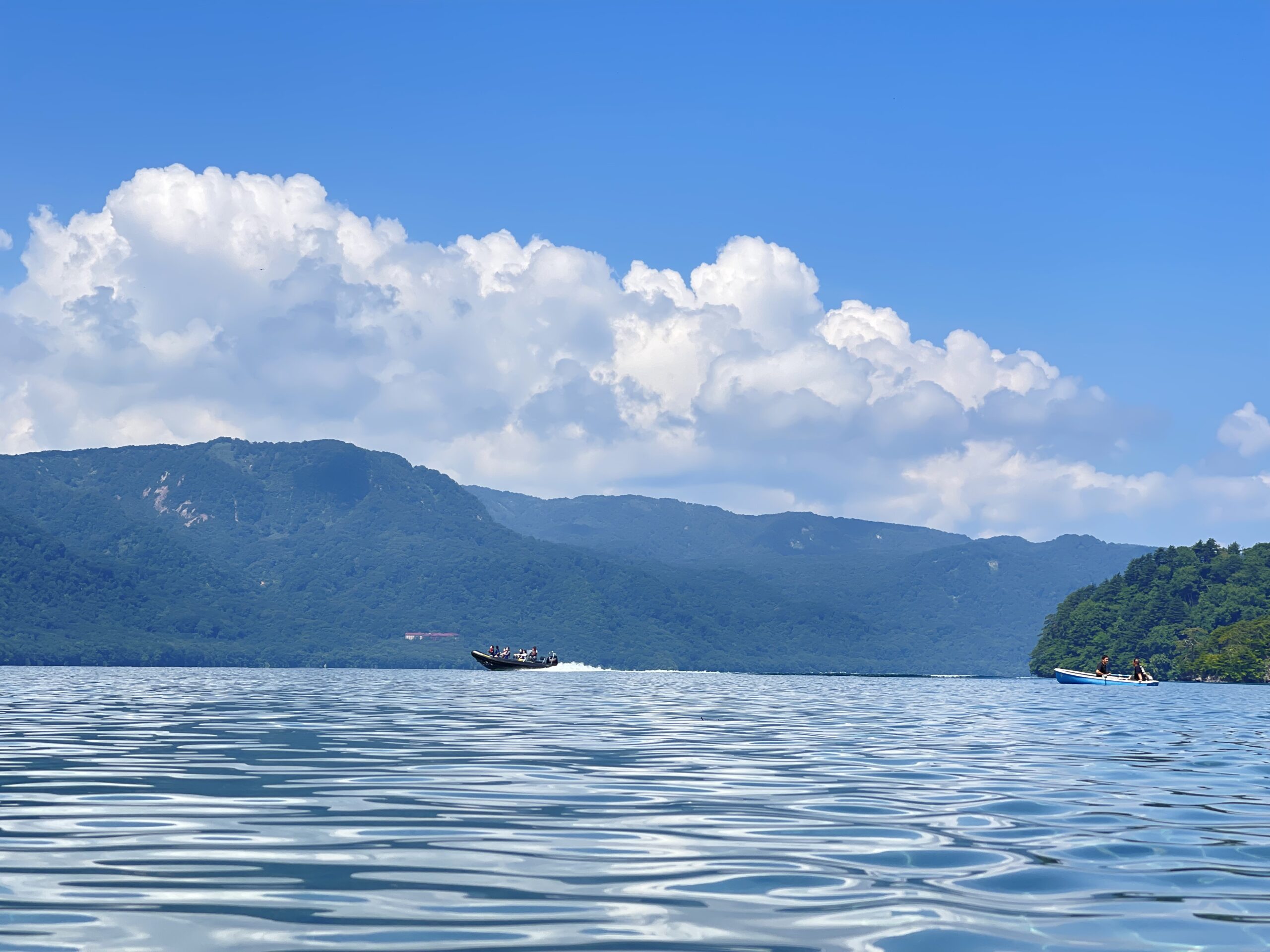
Lake Towada
A crater lake so still at sunrise it barely looks real — a couple of hours from the nearest shinkansen stop, and worth every minute of the drive.
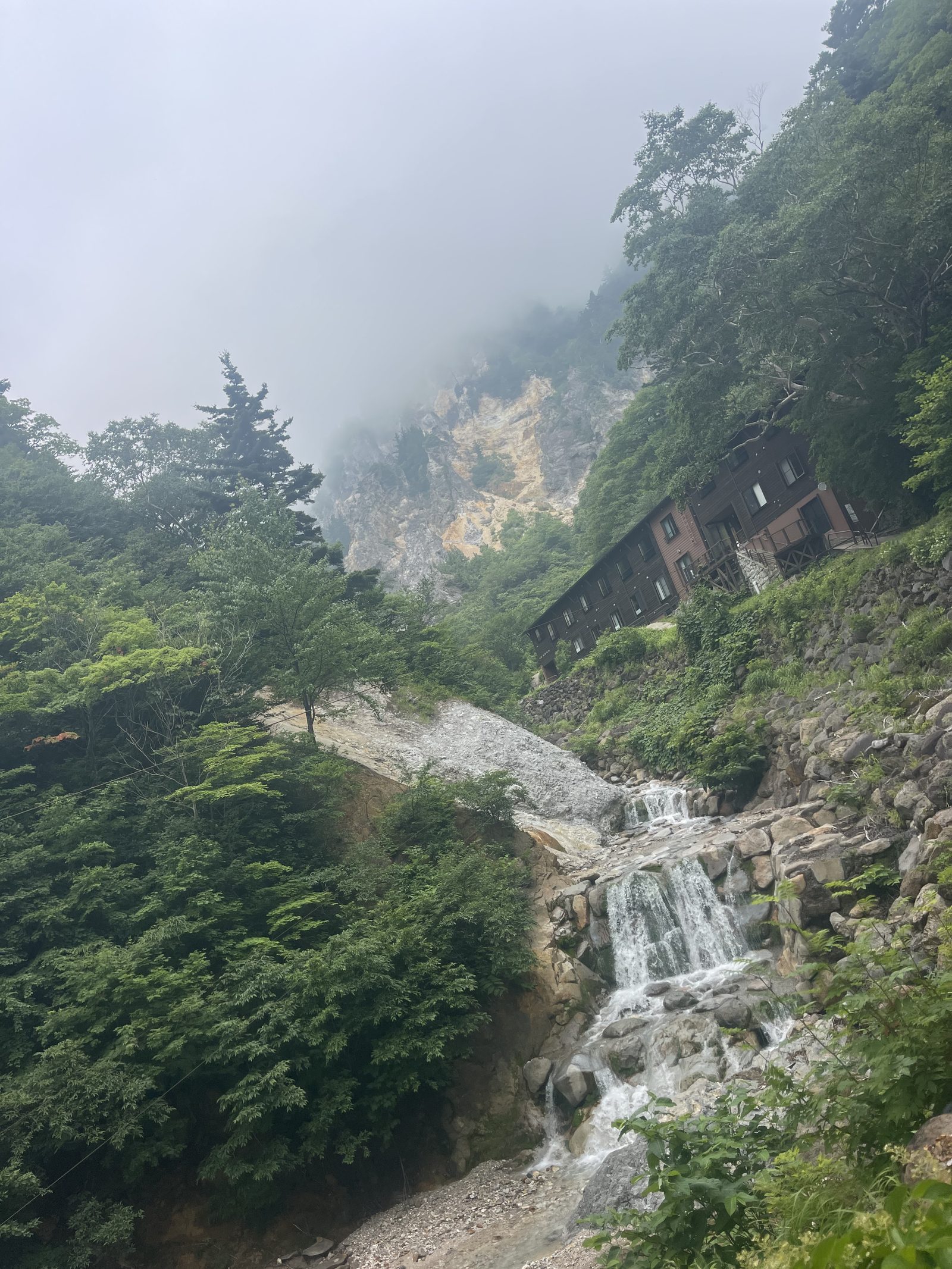
Read → Yamagata · Onsen · Local OnsenUbayu Onsen
A 500-year-old hot spring at 1,300m, reached by suspension bridge and cable car, with a mountain witch’s legend and baths that swap by time of day.
Read →
Yamagata · Onsen · Local Onsen
Onogawa Onsen
Yonezawa’s largest hot spring town — thirteen ryokan you can walk between, with none of Ginzan’s crowds.
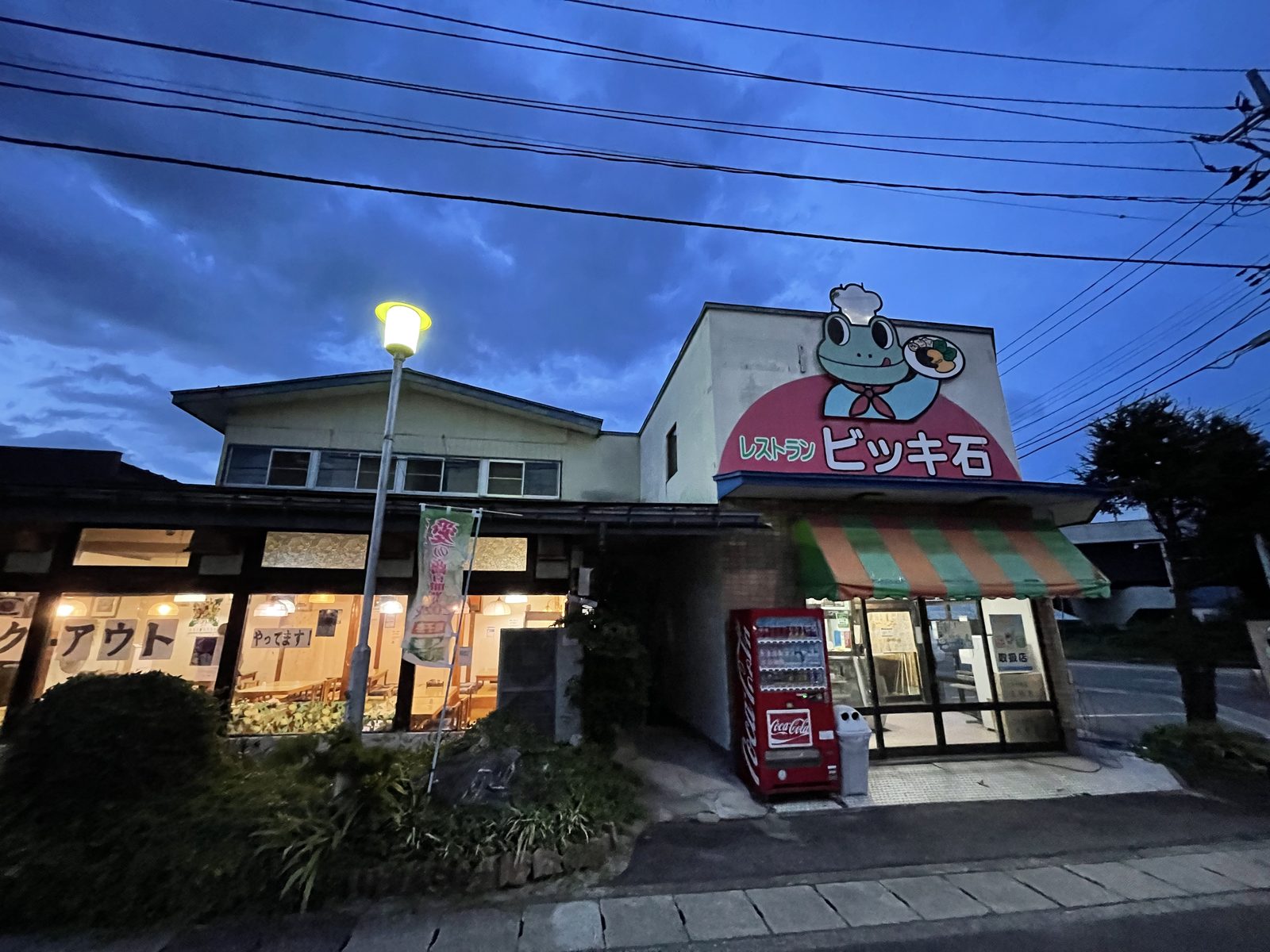
Read → Yamagata · Hike · Rural RoadsBikki-ishi
Not the beef restaurant — a frog-shaped rock on a low hill above Yonezawa, and the myth of a mochi-fight that shaped it.
Read → Fukushima · Teahouse · Slow TravelKurate Chaya
A Meiji-era farmhouse turned udon teahouse at the top of Nakayama Pass, still watching travelers cross after 150 years.
Read →
Miyagi · Waterfall · Rural Roads
Akiu Otaki Falls
Sendai’s easy day-trip waterfall, except the road doesn’t end there — fifteen kilometers on through a gorge open only half the year.
Read → Yamagata · Village · Hidden VillagesSakegawa Village
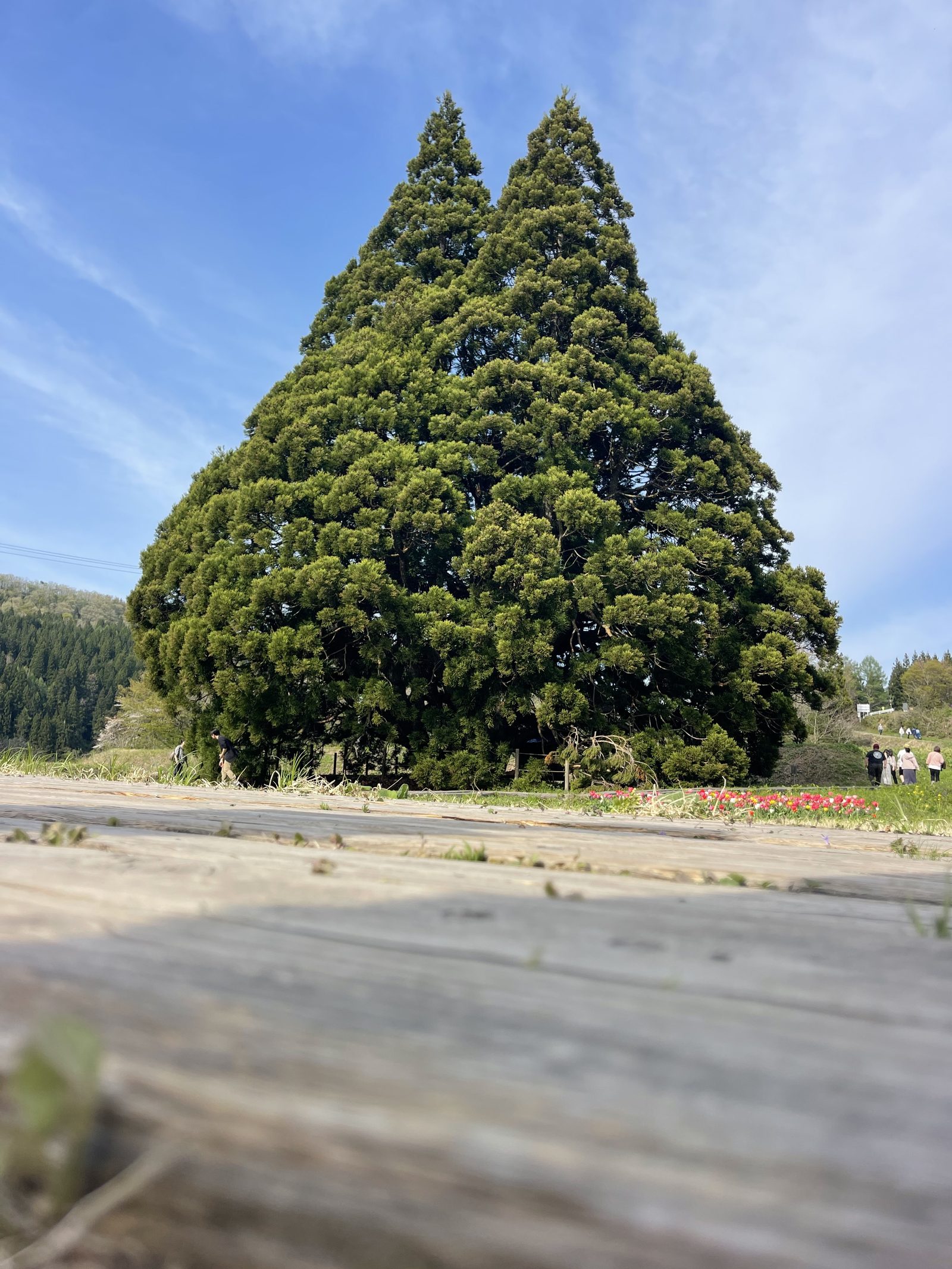
Famous for a cedar that looks like Totoro. Behind it: a salmon river, a mushroom kingdom, and kabuki that’s run since 1773.
Read →Reefs, rivers, and a train platform, along Shikoku’s quieter coasts.
Seven dispatches so far, mostly from Kochi’s remote Pacific coast: heating your own onsen, driving three hours down a peninsula for water clear enough to see thirty meters down, two rivers so clean they keep topping Japan’s water-quality rankings, and lately a first stop in Ehime — the platform one stop past Japan’s most photographed station.
See everything from Kochi →Sugaru Hot Spring
No front desk, no schedule — you gather driftwood and build the fire yourself before you get to sit in it.
Read →
Kochi · Snorkeling · Island
Kashiwajima
Water clear enough that boats look like they’re flying — three hours down a peninsula most of Japan has never heard of.
Read →
Kochi · River · Rural Roads
Niyodo Blue
Japan’s cleanest river by government survey — a color even the locals who grew up on it can’t quite predict.
Read →
Kochi · River · Rural Roads
Shimanto River
Japan’s last clear stream, crossed by more than twenty railingless bridges built to vanish underwater.
Read →
Kochi · Shrine · Slow Travel
Ryugu Shrine
A cliffside shrine near Cape Ashizuri where fishermen’s wives once danced for a good catch, and a walking route to standing stones most guides miss.
Read →
Kochi · Gorge · Rural Roads
Nakatsu Gorge
Seven stone gods a 1980s cabinet grant paid for, and a gentler trail than the crowded pool everyone else photographs.
Read →
Ehime · Train Station · Seasonal Japan
Kitanada Station
One stop past Japan’s most photographed platform, keeping the same sea and sunset with none of the crowd.
Read →Naoki
I grew up in Chiba Prefecture, just outside Tokyo. By trade, I work in construction and architecture — which means when I travel, I notice the things most people walk past. The shape of a farmhouse roof. The way a mountain village sits in a valley. The particular silence of a road that nobody drives anymore.
I don’t travel with a checklist. I just like to drive — decide roughly where I’m headed, then let the road take me somewhere better. This blog is where I write about the places I find along the way.